

In step with Chinese Medicine: reflections and recollections from a long sociological walk

After using and researching Chinese medicine for several decades, I believe it is part of our cultural heritage and, more importantly, a viable option for many everyday health conditions. (Photo credit: Ming Pao Daily)
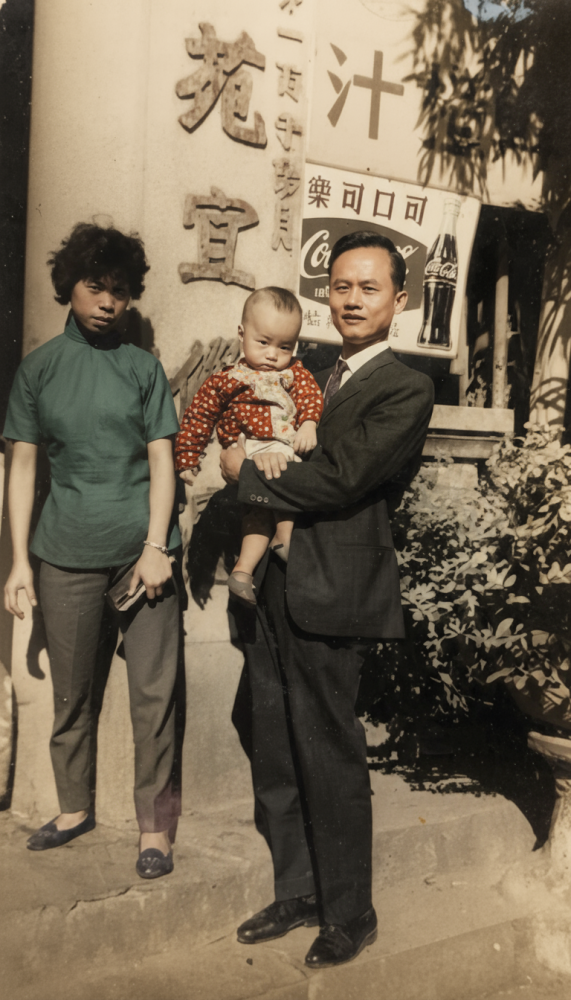
A news report I recently came across, originally published in September last year, brought back vivid memories of my late father. It reported the arrest of a registered Chinese medicine practitioner (CMP) for allegedly prescribing an ointment containing undeclared Western pharmaceuticals—specifically dexamethasone acetate, a steroid. My father, who described himself as a Chinese medicine practitioner, had given me ointments for itchy skin when I was a child. The packaging was in English; years later, with a dictionary in hand, I realised those ointments were steroid-based.
That was not the only instance. When I was about five or six and down with a fever, he once gave me a capsule. The fever subsided for a few days, but I felt dizzy and weak. Later, I suspected it might have been an antibiotic: throughout my teens, whenever I had a sore throat and a Western doctor prescribed antibiotics, recovery often felt prolonged. It was this experience that gradually led me to consult CMPs rather than Western doctors for throat infections.
All of this happened over half a century ago. Yet news reports about CMPs prescribing Western medicine (WM) still surface once or twice a year. To be fair, not all of my childhood memories of Chinese medicine are negative. When my brother and I had acne, my father gave us over-the-counter Chinese pills that worked quickly; this time, I knew they were indeed Chinese medicines—properly packaged and readily available at pharmacies.
I watched him and a circle of “uncles” play mahjong, swap stories and boast—often with disarming confidence—about their medical prowess.
I also glimpsed the social world of CMPs at close range. My father would take me to annual banquets organised by CMP associations. I watched him and a circle of “uncles” play mahjong, swap stories and boast—often with disarming confidence—about their medical prowess.
Under British colonial rule, the social status of CMPs was low. I still remember a “certificate” hanging in my father’s “clinic”. One day, as a bored 13-year-old armed with rudimentary English and a dictionary, I deciphered it: not a medical licence, but a business registration certificate. Under “Occupation” it read “Herbalist”—strictly speaking, someone who sells herbal products, not a doctor. That was, in essence, how Chinese medicine was “regulated” then: effectively, it was not. My father was likely self-taught and self-declared, his clinic signboard hung outside our home.
I do not blame him. It was his way of making a living, and I believe he did help many. The contrast with today is striking. While some elderly CMPs still practise in traditional herbal dispensaries, more often we now see younger practitioners working in modern clinics, university-trained and formally registered. In one of my projects, I described this transformation as the “long march towards professionalisation”—a journey that has become the central thread of my research for over two decades.
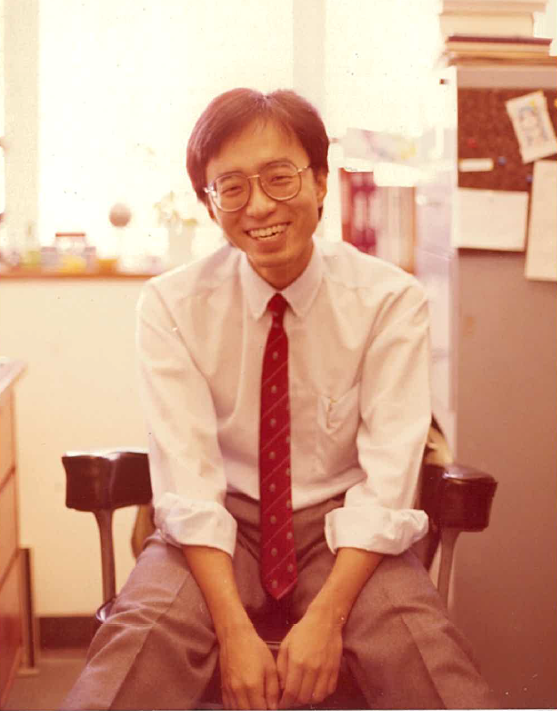
These personal experiences initially nudged me, as an undergraduate and later MPhil student in sociology at the University of Hong Kong (HKU), to consider studying CMPs as an occupational community. But in the 1980s, the discipline’s energy tilted towards class, gender and politics. Education and health—now recognised as crucial—were then often deemed “soft”. My MPhil sensibly, if unimaginatively, examined industrial strikes and collective action among Hong Kong’s working class.
My chance to pursue Chinese medicine as an object of sociological inquiry came around 2000. At the Chinese University of Hong Kong (CUHK), my senior colleague Professor Rance Lee was among Hong Kong’s earliest sociologists to specialise in health and medicine. A doctoral student wished to study Chinese medicine under his guidance, but he lacked the bandwidth to supervise her closely. I was invited to serve as associate supervisor. She wanted to examine post-1997 developments in Chinese medicine. I immediately saw a frame that resonated with my interests: treat the mainstreaming and institutional recognition of Chinese medicine as a social movement. Since then, the professionalisation of Chinese medicine has been a cornerstone of my work.
Parity with Western medicine remained incomplete, but compared to colonial-era marginality, the advance was significant.
Our initial foray reviewed the incorporation of Chinese medicine (CM) into Hong Kong’s medical system: mandatory examinations and registration for new CMPs; the establishment of university training programmes; and the emergence of an umbrella professional body. Chinese medicine began to look more “institutional”, in some respects more akin to Western medicine. My interpretive stance emphasised political opportunity and framing: CMPs capitalised on the window opened by the 1997 handover, nested their claims within a favourable ideological context of rising national identity, and secured formal recognition—ultimately reflected in the Basic Law. Parity with Western medicine remained incomplete, but compared to colonial-era marginality, the advance was significant.
On the strength of research materials assembled by the student, we published an article in a leading journal of medical sociology. At the time, optimism was in the air. The first Chief Executive, Tung Chee-hwa, spoke warmly of Chinese medicine and even imagined a “Chinese Medicine Port” akin to the Cyberport. Utilisation did rise after 1997. With “mission accomplished” seemingly within reach, I turned to other topics—youth and inequality—and set Chinese medicine aside for a time.

The Chinese Medicine Hospital of Hong Kong (CMHHK), the city’s first Chinese medicine hospital, opened in December 2025, marking a milestone in Hong Kong’s commitment to Chinese medicine (CM) development. (Photo from CMHHK)
Around 2015–16, the then Chief Executive, Leung Chun-ying, proposed the city’s first Chinese medicine hospital. It sounded unequivocally positive, yet disquiet emerged within the sector. Revisiting the data, I saw what we had missed: utilisation had been declining since the early 2000s. While I was puzzling over this, a prospective doctoral student approached me. He came from a CMP family—his father and younger brother were CMPs—and he himself relied primarily on Chinese medicine. He intended to study social movements too. I asked: why not pursue something closer to home? He agreed.
Together we completed two projects on professionalisation. Through archival research and in-depth interviews across generations, training routes and practice settings, we traced a differentiation of professional identities: some CMPs centred clinical efficacy and lineage-based traditions; others emphasised academic training and standardisation; still others imagined roles in public health, community medicine or integrative care with Western medicine.
These divergent identities reflected different training pathways (university versus master–apprentice), practice venues (clinics, dispensaries, public programmes, NGOs, cross-border), and generational differences in experiences. Rather than seeing fragmentation as a problem, we viewed it as the ground for deliberation: a precondition for serious discussion about the Chinese medicine hospital, specialisation, integration into the public system and meaningful collaboration with Western medicine.
Joining EdUHK in 2017

I enjoy sharing my research on Chinese medicine, which shows how sociological imagination can link private troubles to public issues. In November 2025, I gave a public lecture to a group of social science students from HKU SPACE.
In 2017, after 26 years at CUHK, I joined The Education University of Hong Kong. With support from the Policy Innovation and Co-ordination Office’s Public Policy Research scheme, our team conducted the largest-ever survey of registered CMPs in Hong Kong. We focused on seven areas: manpower, licensing examinations and continuing education; the Chinese medicine hospital; interactions with Western medicine practitioners; pathways for CM specialisation; regulation and professional participation; incorporation of CM services into the public healthcare system; and opportunities and challenges in the Greater Bay Area. The aim was to map training backgrounds, working conditions and institutional bottlenecks, thereby offering policy-makers a grounded picture of the profession’s present state and preferred futures.
We then turned to the demand side. In 2019 we launched a multi-method study of utilisation, combining a territory-wide phone survey, clinic-based surveys and in-depth interviews with long-term users. We probed attitudes towards CM and Western medicine (WM), care-seeking decisions, common conditions and needs, and expectations regarding the CM hospital, models of CM–WM collaboration, and CM’s role in public healthcare. The COVID-19 outbreak made fieldwork exceptionally challenging, but with support from the Chinese Medicine Development Fund and a dedicated team, we completed the work.
The pandemic changed people’s view toward Chinese Medicine
A public health crisis, it seems, reconfigured many people’s understanding of CM’s place in the medical landscape.
Our 2019 findings indicated that utilisation of Chinese medicine had plateaued in the long run. In response, we secured funding in 2025 to examine post-pandemic usage. Results suggest a marked increase in the use of CM after COVID-19, with women and older adults more inclined to combine CM and Western medicine. Many respondents endorsed CM’s role in prevention and judged it safe and “scientific” in their own terms. Over half reported using anti-epidemic Chinese patent medicines and rated them positively. A public health crisis, it seems, reconfigured many people’s understanding of CM’s place in the medical landscape.
My most recent effort has been to help build a platform for professional development dialogues, an arena where CMPs can exchange views on policy, identify priorities and formulate proposals. This is urgent: compared with Western medicine’s well-institutionalised organisations, the CM sector remains loosely structured, and the momentum of mobilisation seen around 1997 has not been sustained. Without structured dialogue, divisions can widen and good proposals struggle to emerge.

As an integral part of our cultural heritage, Chinese medicine continues to play a vital role in daily life in Hong Kong. Walking into a traditional Chinese medicine shop, visitors are greeted by a nostalgic atmosphere, with a wooden “baizigui” (cabinet of a hundred children) where TCM herbs are kept. (Photo: Alamy)
I believe Chinese medicine is part of our cultural heritage and, more importantly, a viable set of remedies for many everyday health conditions.
I am particularly concerned about the career prospects of young CMPs. Our studies suggest low starting salaries (often below those of nurses), insecure employment, emerging oversupply and unclear advancement pathways. Worse, some professional associations have not fully recognised the problem, contributing to burnout and attrition. We have co-organised career workshops with alumni associations and begun a study of career readiness among CM students at local universities, covering sector knowledge, skills self-assessment, employment anxieties and social capital, to inform targeted support.
I have always hoped not merely to study this profession but to give back to it. I believe Chinese medicine is part of our cultural heritage and, more importantly, a viable set of remedies for many everyday health conditions. Its value to ordinary people is considerable. If my work can help consolidate the profession’s evidence base, strengthen its institutional footing and support its integration within Hong Kong’s healthcare system, then more people will benefit. May the long march continue—steadily, thoughtfully and with the humility to listen and learn.

I give a talk at the School of Chinese Medicine, CUHK, about challenges facing the development of TCM in Hong Kong to an audience of young Chinese Medicine Practitioners.
Note: Professor Stephen Chiu is Chair Professor of Sociology of the Department of Social Sciences and Policy Studies, and Associate Dean (International Engagement) of FLASS. He completed his PhD from Princeton University and had served at the Chinese University of Hong Kong for 26 years before joining EdUHK in 2017. His current research interests include education, social inequality, youth career and life development, and traditional Chinese medicine. He is also an active contributor to public discussions of policy issues in Hong Kong through the news media.
Remark: HKSAR Government’s Press Release: Registered Chinese medicine practitioner arrested for allegedly prescribing cream product containing undeclared Western drug ingredients, 4 September 2025
